SSE Requires Heavy Compliance Burden
The Social Stock Exchange (SSE) has often been misunderstood for imposing a heavy compliance burden on Non-Profit Organizations (NPOs). Many NPOs hesitate to explore the platform of SSE because they believe the regulatory requirements are too complex and expensive.
However, this perception is largely misplaced.
A closer look at the legal framework shows that the Social Stock Exchange does not create an entirely new compliance regime. Instead, it primarily organises, standardises, and discloses information that well-governed NPOs are already expected to maintain under existing laws.
No major new compliance requirements
Every registered NPO in India is already governed by multiple laws depending on its legal structure.
For example, organizations are required to comply with:
• The Income Tax Act, 2025 (Earlier Income Tax Act,1961) for tax exemptions and donor benefits.
• The Companies Act, 2013 (for Section 8 Companies).
• The Indian Trusts Act, 1882 or respective State Public Trust Acts.
• The Societies Registration Act, 1860 or corresponding State laws.
• The Foreign Contribution (Regulation) Act, 2010 (where foreign funding is received).
• CSR Reporting Requirements where corporate funding is involved (Schedule VII of the Companies Act, 2013 and Companies (Corporate Social Responsibility Policy) Amendment Rules, 2026).
The only new and specific compliance SSE listing requires is submission of independent impact assessment of the listed Project. Here again, those organizations which seek funding from large foundations or CSR of large companies, are used to getting impact assessed by the auditors appointed by donors. As such there is nothing new for them.

What Does the SSE Actually Require?
The Social Stock Exchange operates under the SEBI (Listing Obligations and Disclosure Requirements) Regulations, 2015, SEBI (Issue of Capital and Disclosure Requirements) Regulations, 2018 and various SEBI Circulars
governing fundraising through Zero Coupon Zero Principal (ZCZP) Instruments. Most SSE requirements are disclosure-based rather than approval-based
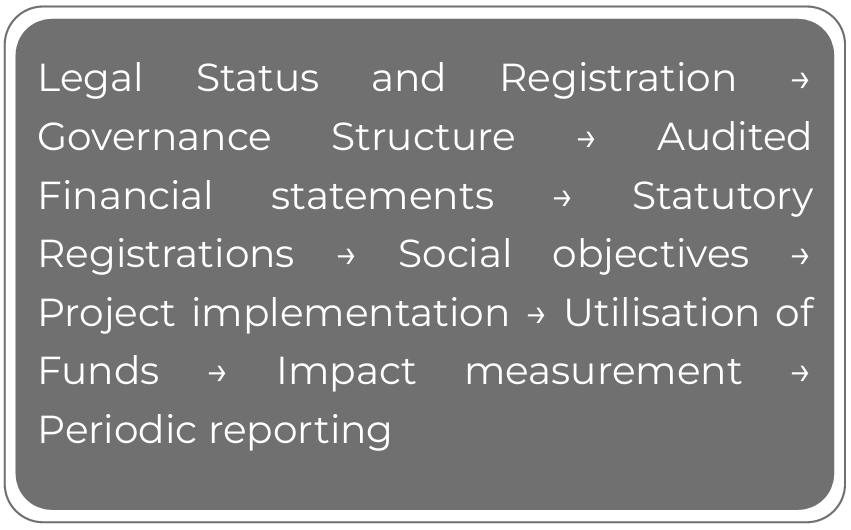
An NPO is expected to disclose: None of these are extraordinary requirements. They simply present existing organisational information in a structured and investor-friendly manner.
Why Are These Disclosures Necessary?
Unlike traditional donations, fundraising through the Social Stock Exchange is conducted on a regulated securities platform. Although contributors do not receive financial returns, they are still investing in measurable Social Impact. SEBI therefore follows the same fundamental regulatory principle applied across capital markets:
Better disclosures lead to better investor confidence Preparing to raise funds through the Social Stock Exchange (SSE) requires Non-Profit Organisations (NPOs) to strengthen their institutional systems. The SSE framework’s
disclosure, reporting and governance requirements are not an added burden – they simply strengthen existing good governance practices through greater transparency and accountability. The focus is on strengthening governance, documentation, financial management, impact measurement by periodic reporting. Strong compliance systems enhance transparency, improve operational discipline, and build credibility in financial and social impact reporting.
Beyond supporting SSE fundraising, they strengthen an Organisation’s reputation with CSR contributors, philanthropic foundations, institutional donors, other Social Investors and even Regulators.
The Perceived Burden Is Often a Preparedness Gap
Many NPOs perceive SSE compliance as difficult because their documentation is not maintained in a systematic manner.
For instance:
• Board or trustee records may be incomplete.
• Policies may exist in practice but not in writing.
• Impact data may not be documented consistently.
• Financial records may not be project-wise.
When an organization decides to raise funds through the SSE, these gaps become visible. Instead, SSE provides a structured framework that distinguishes between essential (“must-have”) compliances and recommended (“good-to-have”) governance practices. When Non-Profit Organizations are seeking to build long-term credibility with donors and Social Investors, a culture of over-compliance is far more beneficial than the risks associated with under-compliance.
Good Governance Is an Asset
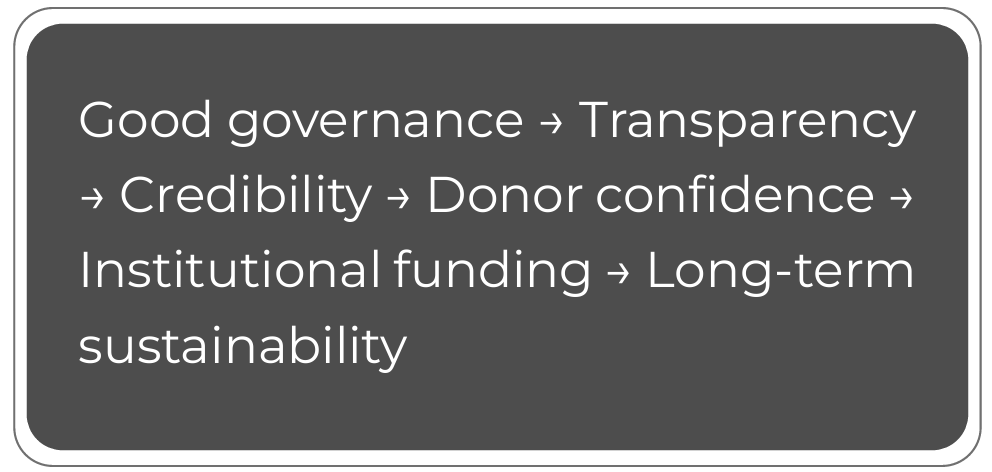
Strong governance is increasingly becoming a prerequisite for institutional funding. CSR Contributors, Philanthropic Foundations, Impact Investors and multilateral agencies all seek transparency before providing any financial support. The governance standards encouraged by the Social Stock Exchange therefore improve an organization’s credibility well beyond SSE fundraising. Organizations with proper documentation often find themselves better positioned to attract diverse funding opportunities.
Uniform and common reporting
The disclosures and reports required by SSE are common to all investors. There is no need to do customised reporting to each investor. This is not the case with CSR where each donor has his own formats and frequency of reporting. Under the revised provisions even if CSR funds were to be accessed for SSE issue, organizations are not required to report separately to individual donor.
Conclusion
The belief that the Social Stock Exchange imposes an excessive compliance burden overlooks an important reality: most of the required information already exists under India’s existing legal and regulatory framework. The SSE primarily consolidates these disclosures into a transparent framework that enables informed decision-making by Donors and Social Investors.ic disclosures.
Recent Blogs